
Understanding testosterone
Testosterone is more than a number.
Testosterone supports muscle, bone, red blood cells, sexual function and reproductive health — and follows a natural rhythm across the day.
See the 24-hour rhythm ↓
The 24-hour rhythm
Testosterone runs on a 24-hour rhythm.
It rises during sleep, is typically highest around waking, then gradually declines through the waking day.
AM · MORNING
Support healthy testosterone.
TAKE PRIME / AM
2 CAPSULES
Healthy testosterone · Vitality · Focus
Why testosterone matters
One hormone. Effects throughout the body.
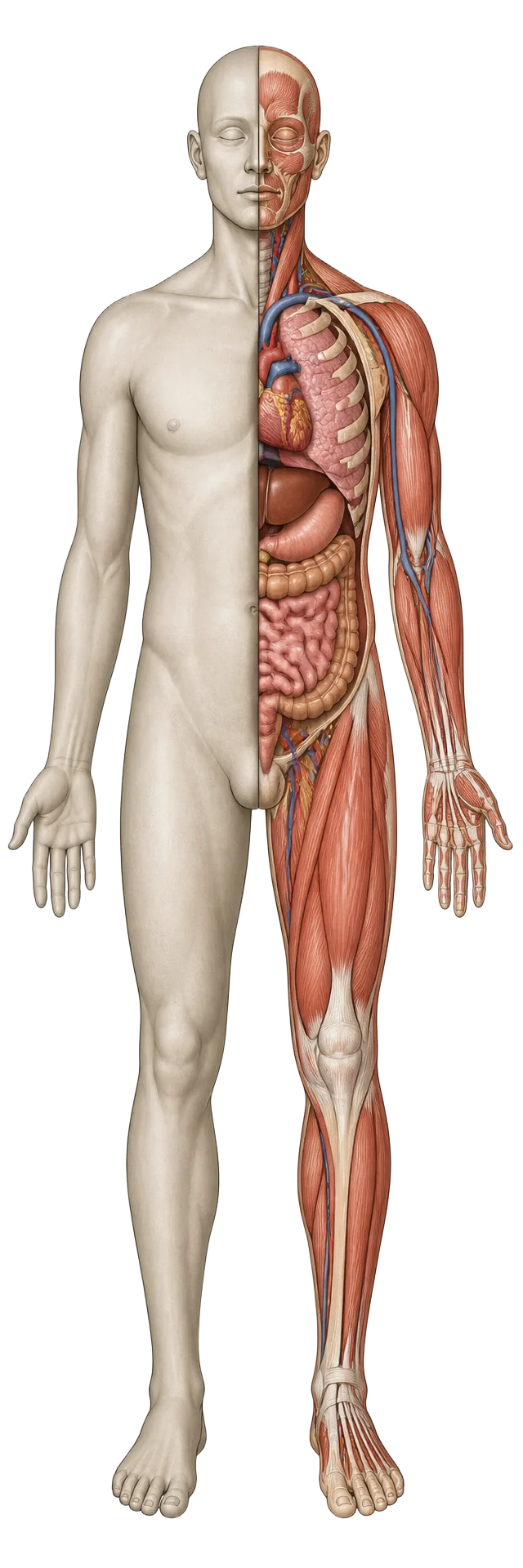
Muscle + strength
Testosterone helps support muscle mass and strength, making it one part of the broader picture behind physical performance and body composition.
Healthy levels matter. More isn’t automatically better.
Testosterone + sexual health
Libido is part of the picture. Not the whole picture.
Testosterone plays an important role in normal sexual desire and male reproductive function. When testosterone is clinically low, reduced libido can be one of the meaningful symptoms clinicians consider alongside blood testing and the broader clinical picture.
But sexual health is multifactorial. Sleep, stress, medications, relationships, cardiovascular health, metabolic health, overall health and other hormones can all matter.
That is why a change in libido should never be reduced to a single number.
- Testosterone
- Sleep
- Stress
- Metabolic health
- Cardiovascular health
- Medications
- Relationships
- Other hormones
Understanding your numbers
A testosterone result only makes sense in context.
Typical adult male total testosterone range
~300–1,000 ng/dL
Ranges vary by age, lab and testing method. A low result is typically confirmed with repeat morning testing and interpreted alongside symptoms.
Total testosterone
All testosterone circulating in your blood, both bound and unbound.

What shapes testosterone
Testosterone doesn’t exist in isolation.
Sleep, training, recovery, body composition, health and medications can all shape the picture.
Sleep helps shape the overnight rhythm that leads into the next morning.
Low testosterone in context
One low number isn’t the whole diagnosis.
Clinicians generally look for symptoms together with consistently low morning testosterone.
Symptoms + signs
Look for changes that fit the pattern, such as reduced libido, sexual dysfunction, reduced muscle mass or strength, or lower bone density.
Morning test
Testosterone is typically highest around waking, so testing is usually done in the morning.
Repeat to confirm
One low reading is not enough. Repeat testing helps determine whether levels are consistently low.
Look for the cause
If symptoms and low levels line up, health history, medications and the broader hormonal system can help explain why.
Fatigue, mood and low drive can occur too, but they are nonspecific and can have many other causes. If you think your testosterone may be clinically low, testing and a qualified clinician are the right place to start.
Who this is for
Men who still expect a lot from themselves.
DEXO is for men who still train, still work, still build, still travel and still want to feel fully present in the rest of their lives.
Men who care about strength and body composition, but also energy, focus, recovery, mood and sexual health.
Not because every marker needs to peak forever. Because maintaining capability matters.
- Strength.
- Energy.
- Focus.
- Recovery.
- Sexual health.
- Capability.
Built around the rhythm
This is why THE 24H SYSTEM has two formulas.
64% OFFvs buying both separately— 64% saving: the 24H System on subscription versus PRIME and RECOVERY purchased separately one time.
Physiology described on this page refers to normal human testosterone rhythm. It is not evidence about DEXO products.